





SC AC Install
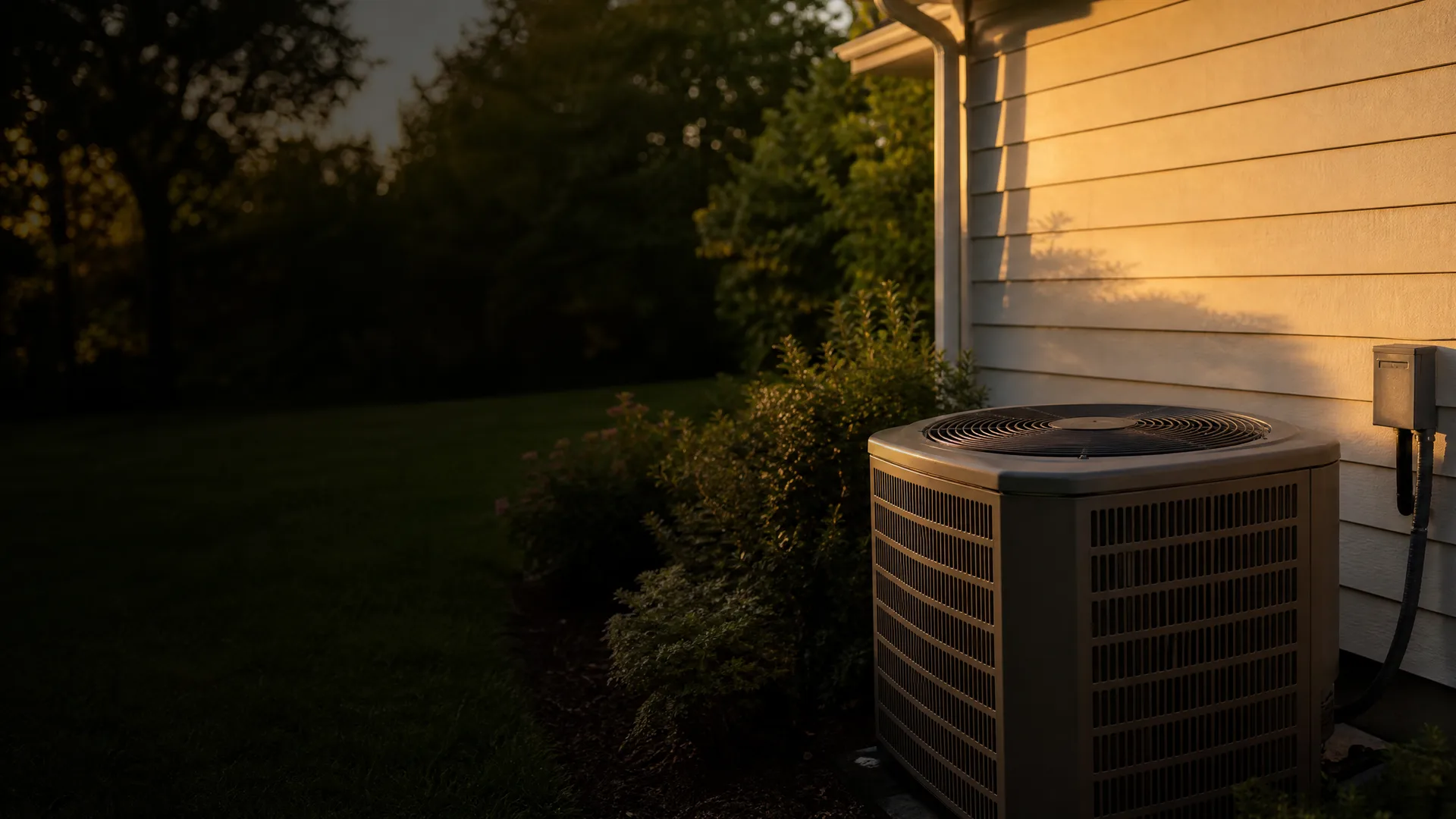
An outdoor air conditioning condenser unit on a concrete pad beside a house with horizontal siding, with an electrical disconnect box on the wall and shrubs to the right in low evening light.

The right pro for this job

Why your AC unit is buzzing in South Carolina

A buzzing AC usually points to something specific: a failing contactor, a loose fan blade, or a compressor under strain from your system running hard through a South Carolina summer. This page walks through what that sound tends to mean and what gets checked first. If you want a second opinion, a local contractor who works on these units all season can take a look.

Connect with a pro

A buzzing sound from your outdoor unit almost always comes from an electrical part, not the fan itself. The most common cause is a failing contactor, the switch that sends power to the compressor and fan. When its contacts pit or burn, it buzzes instead of closing clean. A weak run capacitor causes the same sound, since it can't give the compressor motor the steady push it needs to start and run smooth. Loose panels or a fan blade that has worked itself off balance will also rattle and buzz, especially after a summer of running most of the day. With the heat and humidity here pushing your system to run long hours from spring into fall, these parts wear faster than they would somewhere milder. A buzzing unit can still be cooling fine, but it's a sign something electrical is already struggling, and that tends to get worse, not better, on its own.

An outdoor air conditioner condenser unit on a concrete pad beside a house wall, with a gray electrical disconnect box and conduit above it and grass in the foreground.

What a bad contactor does

A contactor is a small switch that closes every time your thermostat calls for cooling. It opens and closes thousands of times over a summer. The contacts inside wear down and pit, and a worn contactor buzzes under the electrical load instead of switching clean. Left alone, it can fail to open at all, which runs your compressor nonstop. A contractor can test it with a meter and knows the part by sight.

A gray outdoor air conditioner condenser unit on a concrete pad beside a house with horizontal lap siding, surrounded by white gravel and a lawn, with a white wall at left.

Why the fan blade matters

The outdoor fan pulls air through the condenser coil to get rid of the heat your house just gave up. If a blade is bent or a mounting bolt backs out, the blade wobbles and hits the fan guard or shroud on each turn. That contact is what you hear as buzzing. It sounds minor, but a fan that can't spin true moves less air, and the system works harder in the heat to cool the same space.

Wait It Out or Call Now

Buzzing you can wait on

  • The unit still cools the house and the buzz only starts a second or two after the compressor kicks on.
  • The sound is faint and only noticeable if you walk right up to the outdoor unit.
  • Nothing smells hot or burnt near the disconnect box or the unit itself.
  • The buzz comes and goes rather than running the whole time the system is on.
  • The breaker hasn't tripped and the system cycles on and off normally.

Buzzing that needs a look now

  • The buzzing is constant from the moment the thermostat calls for cooling and doesn't let up.
  • The outdoor fan has slowed down, stopped, or looks like it's struggling to spin.
  • You smell something hot or burnt near the unit or the electrical panel.
  • The breaker has tripped more than once, or the system shuts off on its own.
  • Cold air has dropped off noticeably along with the buzzing.
  • The sound has gotten louder or changed over the past few days.
  1. Thermostat calls for cooling and sends power to the contactor

  2. Contactor coil energizes and pulls its contacts closed

  3. Worn or pitted contacts buzz as current arcs across them

  4. Power passes through to the compressor and condenser fan motor

A woman in a cream cardigan and jeans stands with one hand raised facing an open front door of a gray horizontal-siding house, with a black lantern wall light, a potted shrub with yellow flowers, and a stone-faced porch column.

What that buzzing is doing to your system

A contactor that buzzes is still letting current through, but every pitted contact adds resistance. That resistance turns into heat at the connection, and heat there shortens the life of the compressor it's feeding. Through a long South Carolina summer, a unit cycling on and off all day is asking that worn part to make and break contact thousands of times, and each cycle makes the pitting worse.

Left alone, the next step usually isn't a louder buzz. It's the contactor failing to close at all, and your AC not coming on in the middle of a July afternoon, or it sticking closed and running the compressor until something else gives out. Either way costs more than the part itself would have. A local contractor who services this equipment all summer can tell from the sound and the age of the unit whether you've got time to schedule it or whether it needs looking at this week, and you'll hear from one contractor directly, not a handful of companies competing for the job.

Interior corner of a room with a window and sheer curtain at left, a gray upholstered sofa with a cushion at right, and a round wooden table holding stacked books and a round vase with an olive branch.
A gray-haired man in a dark sweater sits on a light gray sofa in a living room, looking toward a sunlit window with trees outside.
A gray-haired man in a dark blue sweater sits on a light gray sofa in a sunlit living room, looking off to the side, with a potted plant, shelving unit, and large glass doors behind him.
A bearded man with graying hair in a dark green sweater sits on a sofa in a living room, looking off to the side, with a sliding glass door and a dim kitchen doorway behind him.
A gray-haired man in a dark knit sweater sits on a light gray sofa in a living room, looking toward a sunlit window, with houseplants, a lamp, and framed art in the background.

Matched to your air conditioner job

A buzzing contactor doesn't fix itself, and running your AC hard through another South Carolina summer with one pitted and arcing puts the compressor at risk, which costs far more to replace than a contactor does. Figuring out whether it's the contactor, a loose fan blade, or something further along takes someone who can get a meter on the unit and look at the contacts directly. That's a licensed contractor working near you in South Carolina, someone who services this equipment all summer and knows which part tends to go first in units running as hard as yours does here. Your request goes to one contractor, not a handful competing for your number, so the person who calls you is the one who'll actually come look at your unit. Get the buzzing checked before it turns into a compressor replacement.

Buzzing that started this week

A contactor that just started buzzing is usually still early in the wearing-down process. You might have weeks or a season left before it fails outright, but the pitting only gets worse once it starts. Each time the compressor kicks on, more current arcs across those damaged contacts. A tech can often catch it with the unit still running, swap the part during one visit, and have the system back to quiet before the next hot stretch sets in. Waiting a little while to get someone out rarely turns into an emergency, but it does mean living with the noise.


Buzzing that's been going on for months

If the sound has been there since last summer, the contacts have had a long time to pit and arc. That heat has been building at the connection the whole time, and it's been reaching the compressor longer too. A unit that's run this way for a season is more likely to need more than a contactor swap. The compressor itself may have taken damage from the extra heat and strain. A contractor can still check it out, but there's less certainty the fix stays small once the buzzing has had that long to do its work.

An outdoor air conditioner condenser unit on a concrete pad beside a house with light horizontal vinyl siding, surrounded by bare dirt, gravel and dry leaves, with refrigerant lines and conduit running along the wall.
Before you get your air conditioner repair
A gray outdoor air conditioner condenser unit on a concrete pad beside a house with horizontal lap siding, with a flowering shrub at left and a disconnect box with conduit on the wall at right.
After you get your air conditioner repair

You hear a buzz, check the breaker panel, and call it fixed because the unit starts back up and cools fine for now.

A contractor who works on these systems every South Carolina summer can tell you whether that same buzz is a contactor a season from failing or a compressor already under strain.

Power costs 15.12 cents per kilowatt-hour statewide

At 15.12 cents per kilowatt-hour, a compressor straining against a worn contactor is pulling harder than it should every time it cycles on. Left alone through a South Carolina summer, that extra draw shows up on your bill before the contactor ever fails outright.

EIA-861 2025 statewide residential average

An outdoor air conditioner condenser unit beside a light-colored lap-sided house with an electrical disconnect box on the wall, surrounded by shrubs and lawn in low evening light.

The sun is low over the yard, that orange light you get in August around seven, when the heat finally starts to let up. You're out back with the hose, and you notice it: the condenser is running, you can hear the compressor, but the fan on top isn't turning. No spin at all. Just that low buzz coming from the unit, steady, not changing. The air coming off the side of it feels hotter than it should. Inside, the house still feels close, even with the thermostat set where it always is. You stand there a second, listening, trying to decide if it's always sounded like that.

A gray outdoor air conditioner condenser unit on a concrete pad beside a house with dark horizontal siding and a stone base, surrounded by gravel, with a flowering shrub at left and a concrete walkway in front.
A clean condenser with tight connections runs quieter because the contactor and fan motor aren't straining against grime or loose mounts.
An outdoor air conditioner condenser unit sits on a concrete pad beside a stucco wall, with refrigerant lines and conduit running to the wall and a shrub to the left.
Years of weather and buildup on the fins and casing put extra load on the same electrical parts, and that's often where the buzz starts.
A single-story red brick ranch house with a gray shingled roof, white-framed windows and a central dark front door, fronted by a wide asphalt driveway, green lawn and large deciduous trees on both sides under a bright hazy sky.

Averaged over the summer in South Carolina, the dew point runs about 69°F, according to NOAA climate data. Air that heavy makes your AC work through two jobs at once, pulling moisture out of the air as well as cooling it, and that extra load falls on the same electrical parts already carrying the compressor and fan. A contactor with worn or pitted contacts has less margin against that load than it would in a drier climate. If your unit buzzes more on the thick, still days than on a drier afternoon, that's the humidity pushing a part that's already going bad a little closer to failing outright.

NASA POWER T2MDEW county cells weighted by homes

A middle-aged woman with shoulder-length dark hair, wearing a gray cardigan over a cream top, sits in an upholstered armchair and looks toward a sunlit window, with a shelf holding framed pictures and a plant behind her.
A woman with her hair in a bun holds a sleeping young child against her chest, both wrapped in a textured beige knit blanket on a sofa in a dimly lit room with a lamp, framed picture, and bookshelf behind them.

What the buzzing tells you

  • A buzzing outdoor unit is almost always a contactor, a loose fan blade, or a compressor working harder than it should.
  • Humid South Carolina summers add moisture-removal to the compressor's job, which adds to the strain on a worn contactor.
  • Waiting on a buzz that's getting louder or more frequent risks the compressor, the most expensive part to replace.
  • A licensed contractor who services this equipment every summer can tell you in minutes which part is wearing out.
  • You're matched with one local contractor for your system, not a list of companies competing for the job.
  • Knowing what the buzz means is the easy part; knowing what to do about it is what a qualified contractor settles.

A buzzing outdoor unit almost always traces back to one of three things: a contactor with pitted contacts, a fan blade that's worked loose, or a compressor pushed harder than it should be running. South Carolina summers don't make that easier. The same humidity that makes your yard feel heavy by mid-morning adds a second job to your compressor's work, pulling moisture out of the air on top of cooling it, and that extra load falls hardest on whichever part is already wearing out. A buzz that's faint and occasional is one thing. A buzz that's getting louder, or starting every time the unit cycles on, is a sign something is further along than it was a month ago, and the part most at risk if it's ignored is the compressor itself, the most expensive thing in the unit to replace.

None of that tells you which part is failing in your system, and guessing wrong costs you time while the real problem keeps wearing. A contractor who services this equipment every summer has heard this exact sound hundreds of times and knows what it usually means before the panel's even off. When you request service through this page, you're matched with one licensed contractor local to South Carolina, not a handful of companies bidding for the work and filling your phone with calls. They'll look at the contactor, the fan, and the compressor's draw, and tell you plainly what's wearing out and what it needs. That's the part worth having someone qualified settle.

An outdoor air conditioner condenser unit on a concrete pad beside a dark horizontal-lap sided house, with mulch beds, shrubs and ornamental grasses nearby.

An air conditioner pro near you

The pro who reaches out is licensed in South Carolina.

Step 1 of 3: Equipment