A burning smell is not the motor wearing out quietly
A dust coating burning off a coil clears in minutes. A wire insulation smell or a hot plastic smell means something electrical is failing and needs a look now, not later.
You walked past the vents and caught it, a burning smell when the AC kicks on. In South Carolina summers, this system runs for months at a stretch, and a smell like that is one of the few warning signs you get before something fails outright. You want to know if this is a quick fix, a dirty filter clearing out, or something that means the unit needs to come off before it causes real damage.
Most of the time, a burning smell means a motor, capacitor or wiring connection is running hotter than it should, often from a part wearing out or a connection working loose. Dust burning off a coil after the system has sat idle smells different, more like a dusty stove, and clears in a few minutes. A sharper, electrical smell that lingers is the one to take seriously. With a South Carolina summer putting long hours on the compressor and blower, a part that's starting to fail gets pushed harder than it would in a mild climate, and that can turn a small problem into a burnt-out motor or a tripped breaker fast. Either way, the system should be shut off until someone looks at it.


A dust coating burning off a coil clears in minutes. A wire insulation smell or a hot plastic smell means something electrical is failing and needs a look now, not later.
Turning the system off keeps the smell from getting worse, but whatever caused it, a seized motor, a failing capacitor, a loose wire, is still there when it comes back on.


Air pulls across the blower motor and its wiring first.
A failing part heats up and the smell starts there.
Air carries that smell through the ducts to every vent.
A contractor traces the smell back to its source part.







This is what the unit should look like outside. The cage and coil fins are clear, the ground around it is just mulch and grass, and air moves through without catching on anything. A unit kept this way has no dirt load to scorch when the compressor kicks on.

Dirt and organic debris have packed into the coil fins and the cage around this unit. That buildup sits right where the compressor and wiring run hot, and it's often what's cooking off and sending that burning smell back through your ducts.

Right now that smell is probably reaching every room the system serves, not just the one you noticed it in. If the AC is running, air is moving across whatever's overheating and carrying it through the ducts to every vent in the house. A South Carolina summer means that unit cycles on again and again through the afternoon and evening, so a part that's already stressed gets another chance to heat up each time the compressor kicks back on.
Left alone, this is the kind of thing that turns a repair into a bigger one, especially anything electrical. Finding someone to look at it shouldn't be its own chore on top of that. You shouldn't have to call around to a handful of companies, explain the same smell and the same symptoms three or four times, then sit with a stack of quotes trying to guess which one actually knows this equipment. A contractor local to South Carolina who works on these systems all summer has likely traced this exact smell back to its source more than once.


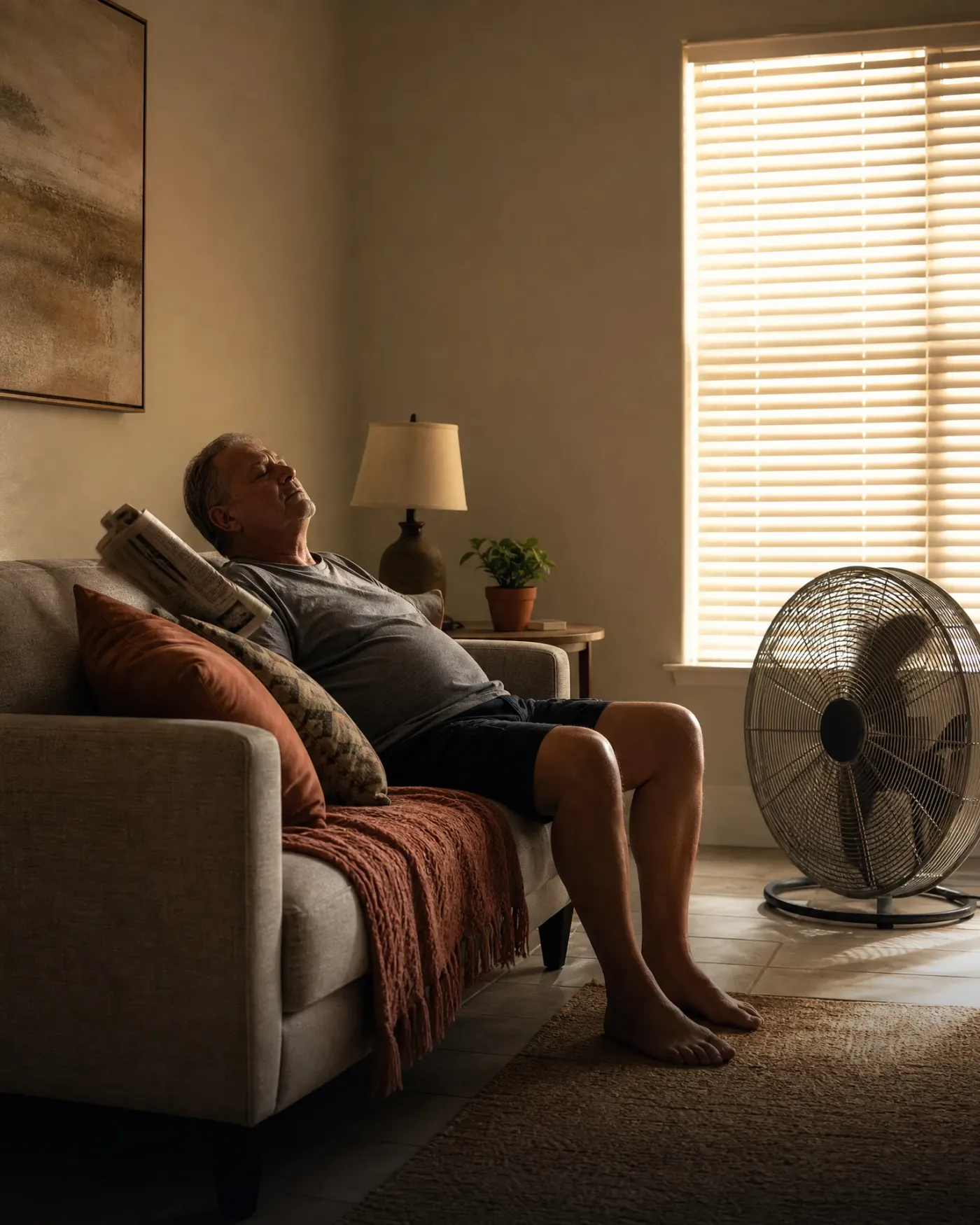
It's gone three in the afternoon and the blinds are drawn against the sun. The floor fan beside the couch pushes air around but doesn't cool it much, not with the vents already carrying that burnt smell through the room. You've turned the TV down out of habit, listening for the compressor to cycle again, trying to catch whether the smell gets worse when it does. A South Carolina contractor who's licensed and local, someone who works on units like yours every summer, could tell you in minutes what's overheating. For now you just sit with the fan running and the blinds shut, waiting out the hottest part of the day.
The pro who reaches out is licensed in South Carolina.
You're not committing to anything by asking.
A few parts inside the outdoor unit and the air handler cause most of this, and they fail in a pattern a contractor can check in order. The capacitor gives the compressor and fan motor the jolt they need to start. When it starts going bad, it can run hotter than it should for weeks before it finally gives out, and that heat is enough to give off a burning smell long before the unit fails to start. The contactor is the switch that closes every time the compressor cycles on, and in a South Carolina summer that can be several times an hour. Each time it closes, the metal points touch and arc a little, and over time they pit. Pitted points arc more, and more arc means more heat and more smell. The blower motor can run hot too, but usually at the bearing rather than in the windings, which is a different repair than a burned-out motor. Then there's wiring, and sometimes the cause isn't wear at all. Mice, roaches and other insects get into the outdoor unit or the air handler looking for a warm, dry place, and they nest right up against the control board and the low-voltage wiring. A chewed wire or a dead insect against a hot contact smells the same way a failing part does. None of these mean the unit has already failed. They mean something is close to it, which is exactly why catching the smell now matters.
At 15.12 cents per kilowatt-hour, a bad part doesn't just risk a fire, it runs up your bill while it fails. A contactor arcing or a blower straining on worn bearings pulls more power than a healthy one, and your AC is the biggest draw on that meter all summer.
EIA-861 2025 statewide residential average

Right now you're the one tracking down who even works on these units, calling around, and repeating the same description of the smell to each one. That's the part a licensed local contractor takes off your plate, someone who sees this exact complaint every summer and knows where to look first.

The unit outside is clean and running the way the one in the first photo does, drawing air through clear fins instead of sitting dirty like the second. No burning smell at the vents, no second call to make, no comparing quotes from three different companies.
It likely will, until the part causing it gets replaced. You'll notice it most when the system first kicks on, strongest near the vents closest to the unit, and fainter the longer the AC has been running. Some households catch it in the thermostat room first, others in whichever bedroom sits above the ductwork. If it's a dust load burning off a coil, it may fade after a few cycles. If it's a part like a capacitor or a contactor, it comes back every cycle, and gets stronger as the part gets worse. Left alone long enough, a failing electrical part can go from a smell to a tripped breaker, or worse, a short that damages the system beyond that one part.

Summer air here averages a dew point of 69°F, from weather data for South Carolina covering June through August. Air that heavy means your AC has to pull more moisture out of every breath it moves, so the system runs longer to get a room down to temperature. The longer it runs, the more cycles that overheating part goes through, and the more chances it gets to throw off that burning smell. You'll likely notice it most on the thick, still afternoons when the unit barely shuts off.
NASA POWER T2MDEW county cells weighted by homes
A burning smell from your AC is the system telling you a specific part has failed or is about to. It's not the motor wearing out quietly, and it's not something that clears on its own once the weather breaks. The part causing it needs to be found and replaced, and until that happens the smell comes back every time the unit runs. You don't have to spend the evening calling around and explaining the smell to three different companies to get there. A contractor who works on AC units all over South Carolina every summer knows what usually causes that smell in a system that's run as hard as yours has, and goes to look at that first. You'll be working with one licensed local contractor, not fielding calls from a handful of them trying to win the job. That part gets handled so you can get back to your evening and let the system run the way it's supposed to, without that smell waiting at the vents.

It costs nothing to send, and you don't have to hire anyone.
That smell won't wait for a convenient week. One request gets a licensed South Carolina contractor who works on these units all summer and already knows what tends to fail, so you explain the smell once and get a real answer back.