


Why your AC outdoor fan isn't spinning in South Carolina

Step 1 of 3: Equipment

Why isn't my AC's outdoor fan spinning?

With the outdoor unit silent, the house starts warming up fast in South Carolina humidity. You walk out and the indoor blower is running, but the fan on top of the outdoor unit just sits there, not even trying to turn. You want to know if this is something simple or if it means the compressor is about to go with it.

A bad capacitor or motor is almost always the cause

Most of the time the fan motor itself has failed, or the capacitor that gives it the jolt to start spinning has gone weak. A capacitor can wear out slowly over years of South Carolina summers and then fail all at once on a hot day, which is exactly when the system is working hardest. Sometimes the motor turns on but moves slowly or hums without spinning, which points to the same part. Less often, a tripped breaker or a bad relay keeps power from reaching the fan at all. Whatever the cause, the compressor inside the unit can overheat if it keeps running without the fan pulling air across the coil, so this isn't something to leave alone for long.

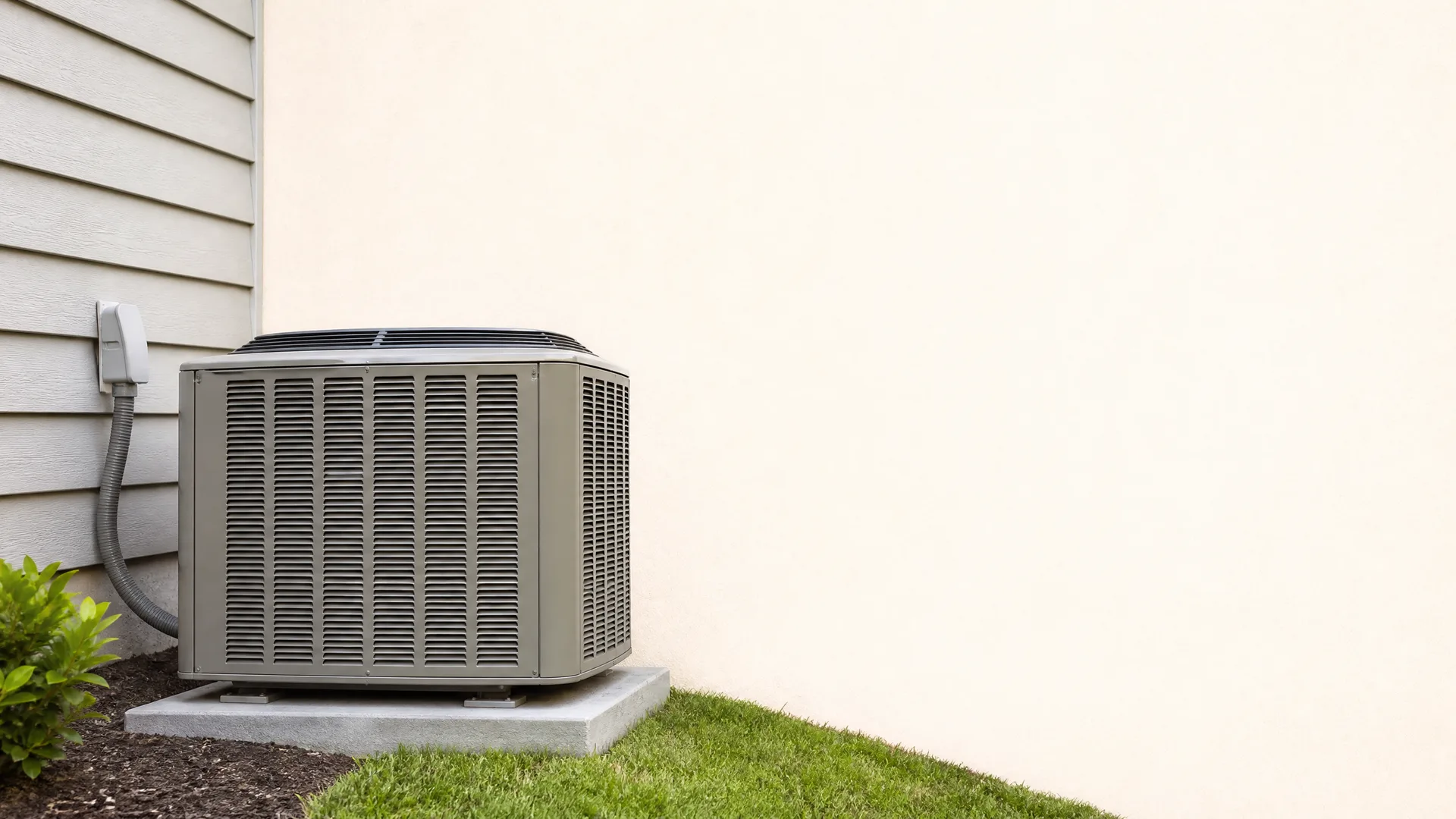
An outdoor air conditioning condenser unit on a concrete pad at the corner of a house, next to vinyl siding and a plain light-colored wall, with grass and a mulch bed in the foreground.

What keeps that fan turning

The outdoor fan motor runs on a capacitor, a small part that gives the motor its initial push and keeps it spinning steady after that. When the capacitor weakens, the motor hums but can't get moving, or it starts and stalls. Capacitors wear out from heat cycling, and a unit that runs for months straight in South Carolina summers puts more cycles on that part than one that gets occasional use.

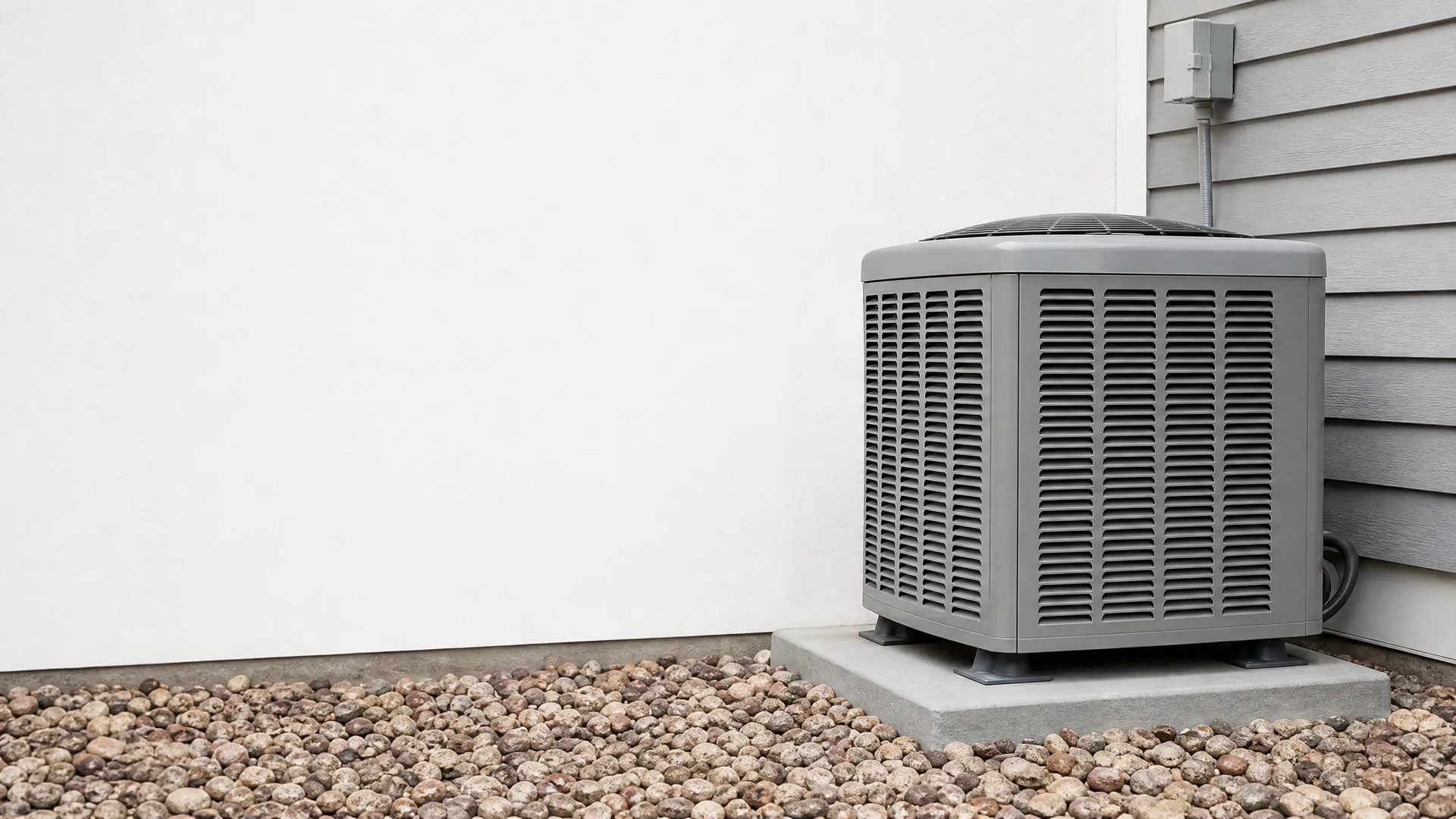
A gray outdoor air conditioning condenser unit sits on a concrete pad beside a white stucco wall and gray horizontal siding, surrounded by rounded landscaping gravel, with an electrical disconnect box mounted on the siding above.

What a stuck fan does next

The compressor inside that outdoor unit still runs even when the fan doesn't turn, and the compressor needs that fan moving air across the coil to shed the heat it's pulling from inside your house. Without airflow, the coil can't release heat fast enough, pressures climb, and the system can trip a safety switch or shut down. Left running that way, the compressor is the expensive part to replace, not the fan.

What are you noticing at your outdoor unit right now?

Go out and look. The fan blades are still, but you can hear a hum coming from the unit, or maybe a faint click every so often as it tries and gives up. The indoor blower still pushes air through the vents, but it's not cooling anymore because the outdoor unit isn't moving heat out of the house. Give it a touch on the side, careful of the panel, and you might smell something warm or burnt, which means the motor has been working against itself. Left alone, a motor that strains like this usually fails for good, and in South Carolina heat that can mean days without cooling while you wait on a part.

  1. Thermostat calls for cooling and sends power to the unit.

  2. The compressor starts up and begins pulling in refrigerant.

  3. The capacitor sends the fan motor its starting jolt.

  4. The fan motor spins the blades to pull air through the coil.

Overheating and Shutting Off, or Actually Failed

Fan motor runs hot and shuts off

  • The outdoor fan motor has a built-in overload switch that trips when the motor windings get too hot to run safely.
  • Once the motor cools back down, usually within half an hour or so, it can restart on its own without anyone touching it.
  • A fan that cycles off and on through the afternoon, especially on the hottest days, points to this rather than a dead part.
  • Dirt and grass clippings packed against the motor housing make it run hotter than it should, so it trips sooner each time.
  • If the motor restarts fine once it cools, the capacitor and wiring are likely still good.

Fan motor or capacitor has failed

  • A motor that hums but never turns, even after sitting off for an hour, usually means the capacitor can't deliver the starting jolt anymore.
  • A motor with worn bearings will drag and eventually seize, and no amount of cooling off brings it back.
  • If the blades don't spin even when nudged by hand with the power off, the motor windings themselves may have burned out.
  • A failed capacitor can also show as a slight bulge on its top or a burnt smell near the unit.
  • Once a motor or capacitor is actually bad, it stays bad until a contractor replaces the part.
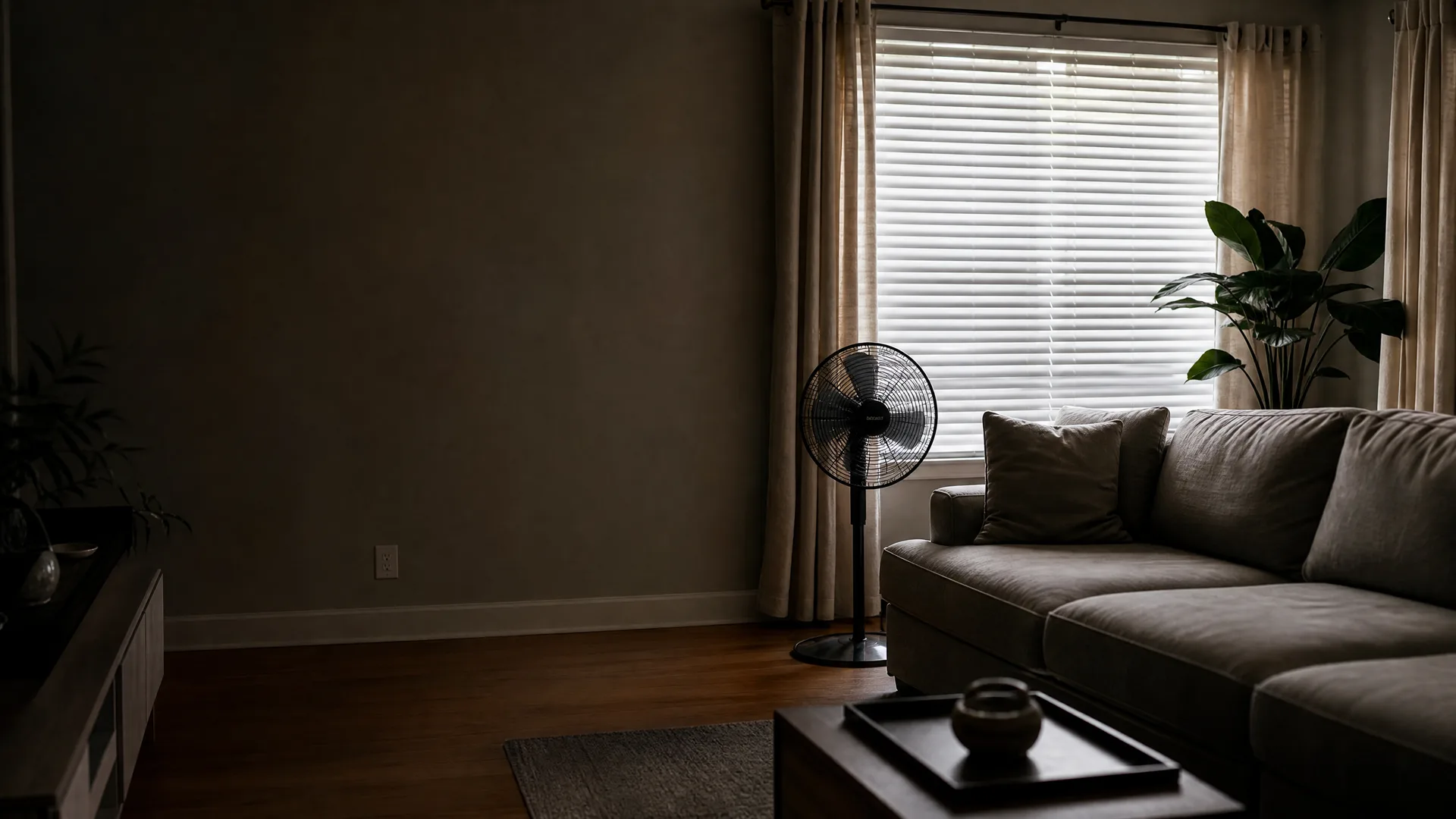
A dimly lit living room with a gray sectional sofa, a standing pedestal fan, a curtained window with blinds, a potted broad-leaved plant, a wooden coffee table with a tray and lidded jar, and a rug on dark wood flooring.

By three in the afternoon the blinds are shut against the sun and the living room still feels close. A floor fan is running next to the couch, turned up high, pushing the same warm air around. You've already checked the thermostat twice. The vents are blowing, but nothing coming out of them feels cool anymore. Outside, the unit is just humming. You'd rather not spend the rest of the day working the phone, calling a few companies, saying the same thing about the fan each time, waiting on callbacks, trying to figure out which quote makes sense. You want someone who works on these units all summer to look at the capacitor and the motor and tell you what's actually wrong.

Explain it one time

Only one pro gets your request, so you hear from one company.

No charge to send it. You decide if you hire them.

The unit is only stalled for now

If the fan motor overheated and shut itself off, it can start spinning again once it cools, especially if the breaker never tripped and the indoor blower kept running the whole time. A capacitor that's weak but not dead can sometimes still get the motor going on a cooler morning even though it fails by afternoon. If this is the first time it's happened and the unit was running hard in the heat, there's a chance it comes back on its own before a contractor even gets there.


Something has to be replaced

A capacitor that's swollen, leaking, or reads well below its rating on a meter isn't coming back. A fan motor with burnt windings or a seized bearing won't restart no matter how long it sits or how many times the breaker gets reset. If the hum keeps happening every time the unit cycles, or the fan never turns at all even once the whole system has had time to cool, the part is done and the house keeps warming up until a licensed tech swaps it out.

A woman with long light-brown hair in a gray knit sweater sits in a living room looking off to the side, with a sectional sofa, houseplant, lamp, wooden table and large windows behind her.
A woman in a chunky gray turtleneck sweater sits indoors looking off to the side, with a blurred dining table, chairs, pendant lamp and window behind her.
A woman in a cream knit sweater with her hair in a bun stands near a window, looking off to the side, with a gray sofa, houseplant and open kitchen with pendant lights blurred behind her.
A woman with long brown hair in a cream knit sweater stands near a window, looking to the side, with a white sofa, shelving, and a hallway visible behind her.

A capacitor is usually the first thing to suspect, since a weak one can run the compressor but leave the fan motor without enough of a jolt to start turning. Plenty of outdoor units use a single dual-run capacitor for both parts, which is why the compressor can hum along fine while the fan sits dead next to it. If the capacitor tests fine, the problem might be mechanical. A fan motor bearing can seize over time, and no amount of electrical power will turn blades that are physically locked up. Sometimes it's simpler than that. Leaves, a vine, or anything packed against the grille can jam the blades from the outside, and the motor never gets a chance to spin. Wiring matters too. The connection at the fan motor can loosen or corrode enough that power never reaches it, even though everything upstream is working. A contractor checks these in order, since testing the capacitor first usually rules out or confirms the most common cause before looking further.

What actually stops the fan

  • A failed capacitor is the most common reason an outdoor fan motor won't start even though the compressor is running.
  • Some outdoor units have one dual-run capacitor that serves both the compressor and the fan motor, so one bad part can stop both.
  • A seized fan motor bearing can keep the blades from turning even when the capacitor and power supply are both fine.
  • Debris wrapped around the fan blade, like a vine or leaves packed against the grille, can physically block it from spinning.
  • A bad fan motor relay or control board can fail to send power to the motor even though the compressor gets its signal.
  • Loose or corroded wiring at the fan motor connection can cut power to just that one component.
A weathered outdoor air conditioner condenser unit on a concrete pad beside a house with horizontal vinyl siding, with a conduit and disconnect box on the wall to the right.
Before you get your air conditioner repair
A gray outdoor air conditioning condenser unit on a concrete pad beside a house with horizontal lap siding, with a conduit and electrical disconnect box on the wall and a green shrub in mulch to the right.
After you get your air conditioner repair
A gray outdoor air conditioner condenser unit on a concrete pad beside a house with horizontal lap siding, with a wall-mounted disconnect box and conduit at left and a green shrub and mulch bed at right.

Fan running, unit cooling

The condenser sits on its pad doing what it should. The fan on top pulls air through the coil, the compressor runs, and cold air keeps coming through the vents. Nothing to see here, which is exactly the point.

An outdoor air conditioner condenser unit on a concrete pad beside a house with horizontal lap siding, with a conduit running to a gray electrical disconnect box on the wall.

Fan stopped, compressor still on

The blades aren't moving, but you can hear the unit humming or clicking against the siding. The compressor may still be running inside that housing. Without the fan pulling air through the coil, that heat has nowhere to go, and the system can't keep up.

Power costs 15.12 cents per kilowatt-hour statewide

At 15.12 cents per kilowatt-hour, running your air conditioner on a stalled fan costs more than it should. The compressor keeps pulling power trying to cool against a coil that isn't getting airflow, so the unit works harder and longer for less relief inside the house.

EIA-861 2025 statewide residential average

A gray outdoor air conditioning condenser unit on a concrete pad beside a house with horizontal lap siding, with a wall-mounted disconnect box and conduit, and shrubs to the left.
The fan spins freely, pulling air through a clean coil so the compressor isn't working against itself.
An outdoor air conditioning condenser unit on a concrete pad beside a house with horizontal siding and a concrete foundation, with dry brown leaves on the ground to either side.
Dirt, fallen leaves, and a few seasons of wear are exactly what lets a fan motor or capacitor give out.
A woman and a child wrapped together in a thick knitted blanket on a sofa, both with eyes closed, with a lit table lamp and houseplant in the dim background.
An older woman with short gray hair in a cream cable-knit turtleneck sweater smiles while looking to the side in a wooden kitchen, with a round loaf of bread on a board in the foreground and a lit candle by a dark window.
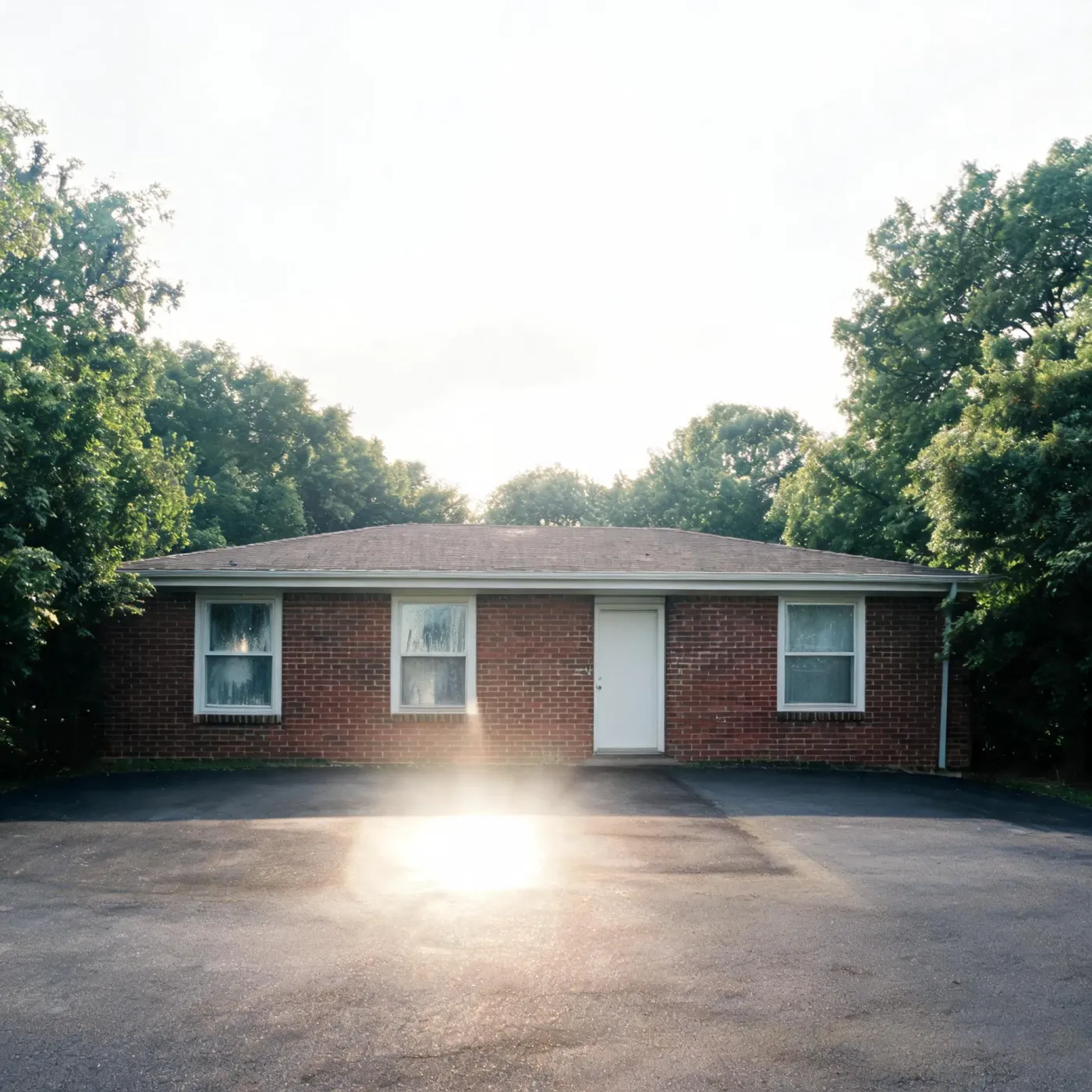
A single-story red brick house with a white door and three white-framed windows, fronted by an asphalt parking area with sun flare, surrounded by green deciduous trees under a bright hazy sky.

South Carolina summers average a 69°F dew point across June, July and August, measured over where homes sit in the state. That's heavy, sticky air, and it's exactly what your air conditioner is built to fight. A coil that can't move heat out fast enough leaves the compressor running longer to pull moisture down, and a fan that's stalled makes it worse: no air across the coil means no heat leaving the house at all. On a day like that, a dead fan shows up fast. The house won't just feel warm, it'll feel wet, and that's your first sign something at the outdoor unit has quit.

NASA POWER T2MDEW county cells weighted by homes

A stalled outdoor fan almost always comes down to the capacitor or the motor itself, and a contractor can tell which with the unit open in front of them. Instead of calling around to different companies, explaining the hum and the stalled blades over and over, you get matched with one licensed contractor working in South Carolina, someone who's out at condensers like yours all summer and knows which part tends to go first on units that sit through this kind of heat and humidity. They show up knowing what they're likely dealing with before they even open the panel. Right now the fan isn't turning, the compressor is running anyway, and the house is warming up while it does. That's the problem, plain and simple. Getting the right person out to look at it is the part you don't have to figure out on your own.

Sunlit corner of a room with a wooden sideboard holding a ceramic vase of olive branches and a dark wooden bowl, beside a white-framed window, a hardwood floor and woven rug.
A wooden cabinet holding a pale ceramic vase with leafy branches stands beside a beige wall in a sunlit room with hardwood floors, a jute rug, and a window showing green foliage outside.
Sunlit room corner with a beige upholstered sofa holding a rust-brown cushion, beside floor-length linen curtains at a window, over a wood floor with a woven rug.
Corner of a room with beige walls, a framed photograph, a floor-length linen curtain beside a window, an upholstered armchair with a knit pillow, white baseboards and trim, wood flooring and a pale rug.
Sunlit living room corner with a beige upholstered armchair with a cushion, linen curtains beside a wooden-framed window, green vertical panelled wall with a framed print, and a wooden table edge over a woven rug.

Skip the calls to every shop

Your request stays with one local pro.

Describe it once

There's no charge for the request.