

One degree every 20 minutes
That is about what a straining system can pull off on a muggy afternoon. If your house is climbing instead, something in the system is already behind.
Your AC loses the fight on the hottest days because of the humidity as much as the heat. South Carolina summers load the air with moisture, and your system has to pull that out before it can cool the air you feel. On a dry 95 degree day a properly working unit can keep up. Add the humidity South Carolina summers carry and that same unit falls behind, especially if it's already working with a dirty coil, a low refrigerant charge, or a filter that's choking airflow. None of those are new problems. They were there in May, just small enough that the system could still push through. July and August take that cushion away. If your house won't come down to the temperature you set, or the air feels cool but still damp, the system isn't broken so much as it's outmatched, and that usually traces back to something fixable rather than something worn out.
Heat and humidity load the air faster than the coil can pull it out
The indoor coil loses its cold edge trying to keep up
Refrigerant returns to the compressor warmer than it should
The compressor runs longer and harder to make up the difference




That is about what a straining system can pull off on a muggy afternoon. If your house is climbing instead, something in the system is already behind.
Humid air makes the indoor coil work harder to wring out moisture before it cools anything. A tech can check if it's keeping pace or just running long.
You set it to 72 and the house settles at 76 and stays there. The air coming out of the vents feels cool but not cold, and it feels damp even when the thermostat says the system is running. You might hear the outdoor unit running nonstop through the afternoon, shutting off for a few minutes, then starting right back up. Upstairs stays warmer than downstairs. The air inside feels sticky even with the AC on, which means the system isn't pulling the moisture out the way it should. Left alone through a full South Carolina summer, a system working this hard tends to wear out parts faster, and a compressor that runs under strain for weeks at a time is more likely to fail outright before fall.
A summer dew point averaging 69°F across South Carolina, measured by NOAA, is the kind of air that sits heavy even in the shade. For your AC, that moisture is a second job on top of cooling. The coil has to condense water out of every cubic foot of air before the house feels any drier, and that water has to drip away through the condensate line while the compressor keeps running. At 69°F dew point, the air holds enough moisture that your system can be running nearly nonstop and the house still feels clammy. If the vents are blowing cool but the air inside still feels damp, the system is losing that fight.
NASA POWER T2MDEW county cells weighted by homes
You turn the thermostat down and the system answers by running and running, but the house never quite gets there. It is not short cycling, where the unit clicks on and off. It is the opposite: it just keeps going, hour after hour, and the air coming out never feels like it used to. That is a different problem than a unit that will not start at all.
A unit that runs nonstop is still doing its job, just not enough of it per hour. Every pass of air across the coil removes a little heat and a little moisture. If the coil is low on refrigerant or dirty, or if airflow through the ducts is restricted, each pass removes less than it should. The thermostat keeps calling for cooling because the house is still above setpoint, so the system never shuts off. Where South Carolina summers push heat and humidity into a house all day, a system running at reduced capacity can run from morning to night and only hold the house a few degrees below outside, never reaching the number on the thermostat.


Most of what slows your system down on a hot day traces back to one of a few parts. A filter clogged with dust chokes the airflow the coil needs, and once that airflow drops, ice can form on the coil even when it's 95 degrees outside. Low refrigerant means the system has less capacity to absorb heat from your house, so the compressor runs harder and still can't keep pace. Outside, a condenser fan that has slowed down can't push heat out of the unit fast enough, so it backs up. In the attic, leaky ducts let cooled air escape before it reaches the far rooms, which is why the back bedroom never feels right. A thermostat sensor that drifts even slightly can shut the system off before the house is actually cool. And the small electrical parts, the contactors and capacitors, wear down over years of summer use, making the compressor slower to start each time it cycles on. Any one of these cuts into what your AC can do on the hottest afternoons.


Your request goes to one pro, not a list of companies.
Describe your air conditioner job, and a local pro who handles it gets in touch.
You're not committing to anything by asking.
At 15.12 cents per kilowatt-hour, every extra hour your compressor runs on a muggy day shows up on the bill. A system that's fallen behind doesn't just leave the house warm, it keeps drawing power the whole time it struggles to catch up.
EIA-861 2025 statewide residential average

Clear coil fins let the unit dump heat into the outside air the way it was built to. On a muggy afternoon that margin is what keeps the house dropping instead of holding steady.

Dirt and yard debris packed into the fins hold heat against the coil instead of letting it release outside. The compressor runs the same hours and the house still doesn't catch up.



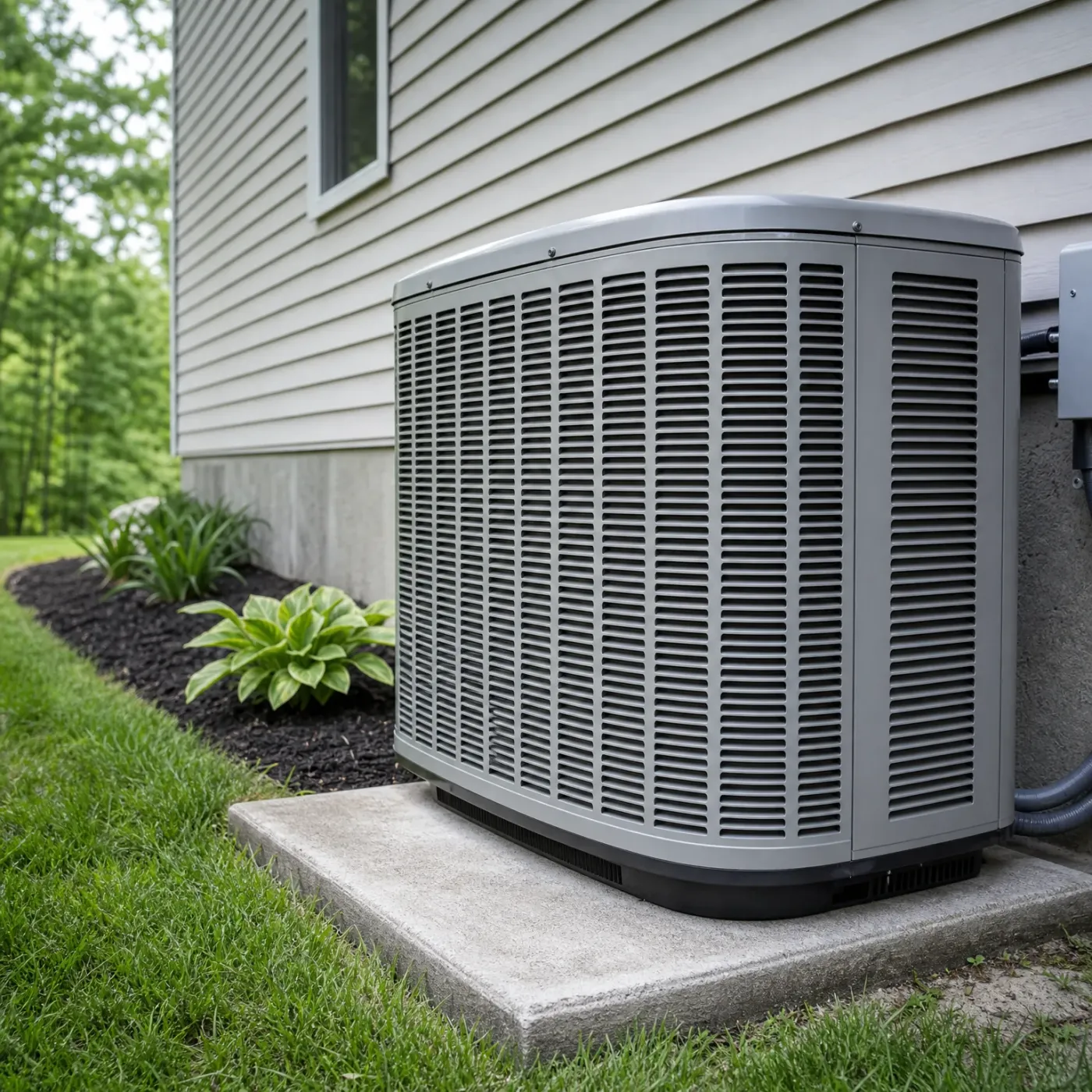
This unit sits on a solid pad with open space on every side. Air moves through the fins and out the top without a fight. On a muggy July afternoon that clearance is what lets the coil dump heat outside fast enough to keep pace with the house.

This unit has gravel and dried weeds pressed right up against the housing, and the siding behind it blocks the back side from breathing. Airflow in is already short before the compressor even starts working. Add a 95 degree day and it falls behind early and stays there.

Heat alone your system could probably handle. Heat and humidity together on a South Carolina afternoon is a different load, and a unit that's lost even a little ground, a weak capacitor, a dirty coil, refrigerant a pound low, won't have the margin to keep up. That's the plain answer to why the house won't cool down past a certain point no matter how long the system runs.
Catching it now, before a 95 degree day finds the weak spot for you, is the whole point of looking into it. A contractor who works on systems in this climate every summer knows which parts tend to give out first and can look at yours directly instead of guessing. You'd be matched with one contractor local to you, not a handful competing for the job, so the person who calls you back is the one who'll actually be doing the work.

It costs nothing to send, and you don't have to hire anyone.
A local contractor who works on South Carolina systems all summer knows what a muggy July afternoon does to a tired capacitor or a low charge. Send your request and get matched with one who can look at your unit directly instead of guessing over the phone.