






SC AC Install
Profile view of a bearded man wearing a black baseball cap and a dark gray T-shirt against a plain light background.

Do you need a dehumidifier with AC in South Carolina

Step 1 of 3: Equipment

Most homes in South Carolina get real benefit from a standalone dehumidifier alongside the AC. Your air conditioner takes moisture out of the air as a side effect of cooling, but it's only sized to cool, so on a muggy day it can hit the thermostat's temperature setting and shut off before it's pulled enough humidity out of the air. That leaves the house feeling damp and sticky even though the air is cold. A whole-home dehumidifier works independently of the thermostat, so it keeps running and pulling moisture even when the AC doesn't need to. For a lot of homes here, that's the difference between a house that feels cool and dry and one that feels cool and clammy. It also means less strain on the AC itself, since it isn't being asked to overcool a room just to wring out the extra moisture.

An outdoor air conditioner condenser unit on a concrete pad beside a house with beige horizontal siding and a stone-veneer base, with refrigerant lines running to a gray wall-mounted electrical box, surrounded by dark mulch, a flowering shrub and an evergreen on the left.
Your AC cycles off once the thermostat is satisfied, and the air stays dry because a dehumidifier is handling the rest.
An outdoor air conditioning condenser unit on a concrete pad beside a house with light vinyl siding, an electrical disconnect box and conduit on the wall, bare shrubs and mulch to the right, and a concrete walkway in the foreground.
Your AC shuts off before the humidity drops, and the air stays damp enough to feel warmer than the thermostat says.
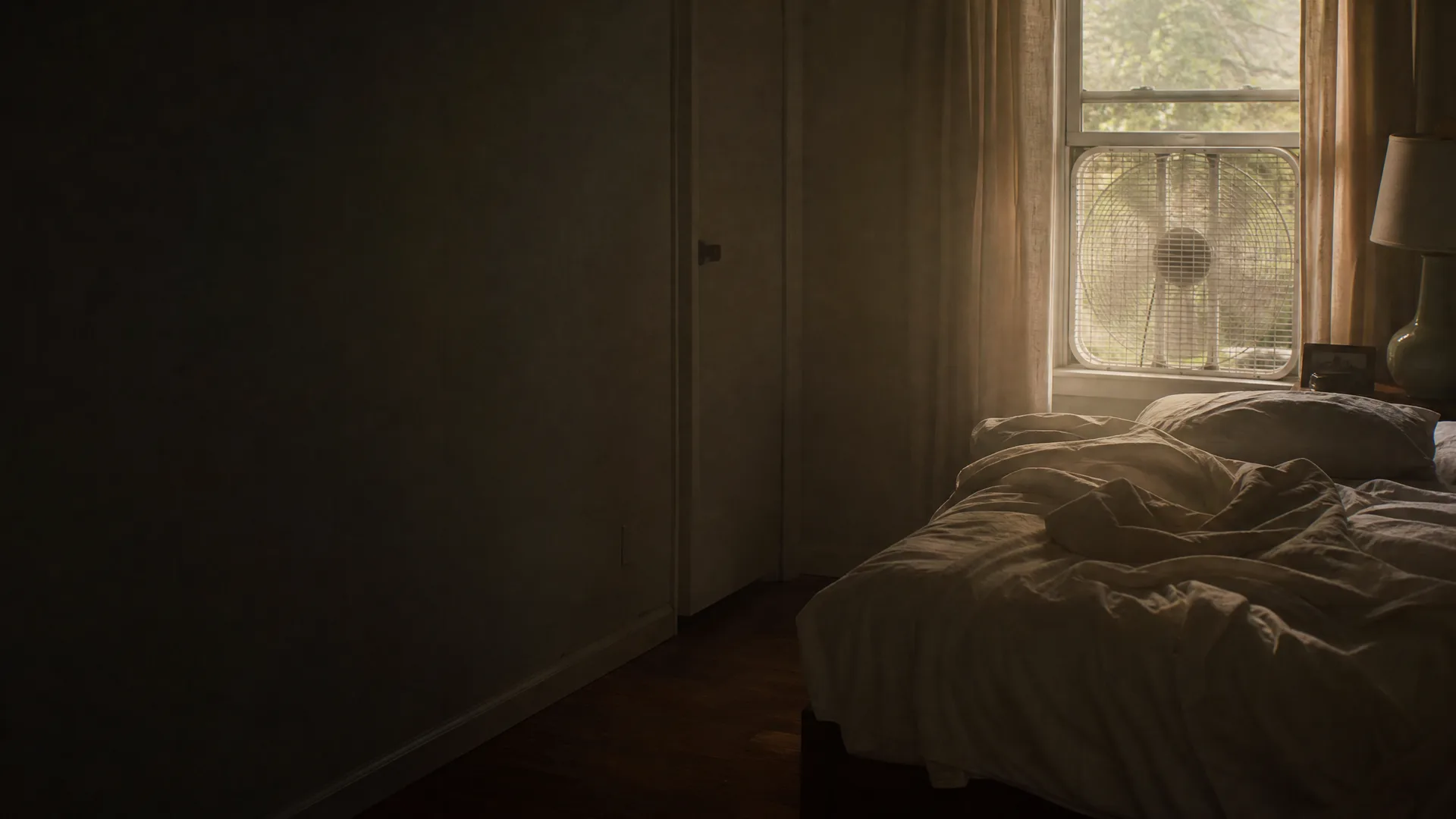
A dim bedroom with an unmade bed beside a window holding a box fan, with sheer curtains, a lamp at right and a large blank wall at left.

It's past eight and still bright out, the kind of June evening that doesn't cool off the way you'd expect. Your son's room is on the upstairs, and that's always the warmest spot in the house. The box fan is going in the window, pushing around air that's already thick. He's kicked the sheet down to the foot of the bed. You go up to check on him and feel it as soon as you're past the stairs, that heavy, damp air that sits on you even though the thermostat downstairs reads 72. The fan just moves the wet air around. It doesn't take any of the moisture out of it.

A man seen from behind raises his hand to wave at a woman standing in the open front doorway of a single-story house with gray shingle siding, white columns and a gabled porch entry.

Why your AC stops short of drying the air

Your thermostat only measures temperature. Once the air hits the set point, the AC shuts off, whether the humidity is at 40% or 65%. The compressor doesn't run long enough on a mild day to pull much moisture out, because the thermostat is satisfied first. A standalone dehumidifier works off its own humidistat, so it keeps running until the air actually reaches the level you set, independent of what the thermostat is doing.

That's the piece most people don't know is missing: two different machines reading two different things. If you've gotten this far, you already understand why the air in your house feels heavier than the number on the wall suggests. A contractor who installs dehumidifiers in South Carolina homes can look at your system and your layout and tell you what size unit actually matches what your AC is leaving behind. Send the details once and that's the part you hand off.

A living room corner with a beige upholstered armchair holding navy and striped cushions, a small round wooden side table with a carved bowl and a potted green plant, a framed landscape picture on a pale wall, built-in shelving, and a curtained window.
  1. Warm, humid air from the room passes over the dehumidifier's cold coil first.

  2. Moisture in the air condenses on that coil and drips into a drain or tank.

  3. The drier air passes over a heating element and warms back up slightly.

  4. That drier, reheated air returns to the room while the AC handles temperature.

Why does your house feel sticky even when it's cool enough

You walk in, check the thermostat, and it says 72. But the air still feels heavy, your skin stays damp, and the sheets feel cool and clammy at night instead of dry. Wood doors stick in their frames. Windows fog on the inside. A musty smell builds in the closets or the room over the garage, especially upstairs where heat and moisture both settle. None of that shows up on the thermostat, because the thermostat only tracks temperature. Left alone through a Carolina summer, that extra moisture gives mold and mildew what they need to take hold in closets, bathrooms and anywhere air doesn't move much, and it can make the whole house feel harder to breathe in.

An outdoor air conditioning condenser unit on a concrete pad beside a house with white horizontal lap siding, with an electrical disconnect box and insulated refrigerant line on the wall and a shrub over mulch to the right.

The condenser running the way it should

A unit like this cycles on, pulls heat and moisture out of the house, and shuts off clean once the thermostat is satisfied. The lines stay wrapped, the pad stays level, and the disconnect box next to it is there for a technician to shut power before any work starts.


An outdoor air conditioner condenser unit on a concrete pad beside a house with light horizontal lap siding, with an electrical disconnect box and conduit on the wall behind it.

A unit worth having looked at

Weathering like this on the cabinet doesn't mean it's failing, but it's worth a second look alongside the humidity in the house. An older or undersized condenser can still hit the thermostat's setpoint without running long enough to dry the air behind it.

A woman with long wavy brown hair in a grey ribbed sweater sits on a couch indoors, looking toward a window, with a potted palm-like plant and fireplace behind her.
A woman with long brown hair wearing a green V-neck top and beige cardigan sits on a light sofa, looking off to the side, with a dining table, lamp and framed picture in the background.
A woman with long dark hair in a cream knit sweater sits on a beige sofa indoors, looking toward a bright window with a houseplant and framed picture in the background.
A woman with long dark hair in a green knit sweater sits on a couch indoors, smiling and looking toward a window with a blurred room behind her.

A pro who works on air conditioners

Send the request and finding a pro stops being your problem.

No fee to send it, and nothing to sign.

What a dehumidifier does to your bill

A standalone dehumidifier runs on electricity, and most homes here heat with electricity too, so it shows up on the same bill you already watch every month. What it changes is how hard the AC has to work to get there. Once the air is drier, your AC satisfies the thermostat sooner and shuts off instead of running long cycles trying to chase both heat and moisture at once. South Carolina summers put a lot of moisture in the air for a lot of months, so the AC alone is often cycling on and off all day without ever getting ahead of it. Taking the moisture out separately means the AC is only doing the job it was sized for.

What the coil and drain actually handle

Inside the dehumidifier, the cold coil is doing the same basic job as your AC's coil, pulling moisture out of the air that passes over it. The difference is that this coil isn't tied to a thermostat upstairs. It keeps running based on a humidity setting, so it keeps pulling water out of the air whether or not the house has reached temperature yet. That water has to go somewhere. Most units drain continuously through a hose or pump instead of a tank you empty by hand, which matters in a climate where the unit could be running most of the year rather than a few weeks at a time.

An outdoor air conditioning condenser unit on a concrete pad beside a house with white horizontal vinyl siding, with a gray electrical disconnect box and refrigerant lines on the wall behind it.
Before you get your air conditioner installation
A gray outdoor air conditioner condenser unit on a concrete pad beside a house with white horizontal siding and a brick foundation, with a wall-mounted disconnect box and conduit, and a green shrub with mulch at left.
After you get your air conditioner installation

Power costs 15.12 cents per kilowatt-hour statewide

At 15.12 cents per kilowatt-hour, a dehumidifier running alongside your AC adds a modest, predictable amount to your bill. Since your air conditioner isn't cycling as long trying to wring out moisture on its own, you're not paying double for the same comfort.

EIA-861 2025 statewide residential average

The Short Answer on Humidity

  • A dehumidifier alongside your AC keeps indoor humidity steady even on the muggiest days when the thermostat alone can't tell the difference.
  • Your AC still handles the temperature; the dehumidifier handles the moisture your AC was never sized to finish off.
  • The added cost shows up on the same electric bill you already watch, and it's offset some by shorter AC run times.
  • Once you send the form, you're done hunting for someone to call and can get back to the rest of your evening.
  • A contractor who installs these systems in South Carolina homes will size the unit to your house, not a guess.
  • The fix isn't dramatic: it's one more piece of equipment working with the AC you already have, not against it.

Yes, most homes in South Carolina do better with a dehumidifier running alongside the AC. Your air conditioner is built to cool the air, and it only pulls out moisture as a side effect of that job. On a muggy day the thermostat can hit 72 and the house still feels damp, because the compressor shut off before it ran long enough to catch up with the humidity. A dehumidifier picks up where the AC stops. It runs on its own schedule, pulling moisture out of the air whether or not the AC happens to be cycling at that moment, so the house stays dry even when the outside air is heavy.

The two machines end up sharing the load instead of one straining to do both. The AC isn't cycling longer trying to wring moisture out on its own, so some of what the dehumidifier adds to the bill gets offset by shorter AC run times. It shows up on the same electric bill you already check every month, not a separate cost you have to track down.

Sizing it right takes someone who knows the house, the square footage, and how the AC is already set up. That's not a guess you want to make on your own. Once you send the form, the job of finding that person is off your plate. You get matched with a contractor who installs these systems in South Carolina homes, and from there it's a conversation about your house, not a research project you have to run yourself.

Sunlight falls across a beige upholstered sofa with a textured woven cushion and a chunky knit throw, beside a dark wood cabinet holding a ceramic vase with green leafy branches, near a white-framed window.
A sunlit corner of a room with a wooden side table holding a ceramic vase of green foliage and a wooden bowl, beside a light upholstered sofa with a knit throw and rust-colored pillow, with window shadows cast on a beige wall.
A sunlit room corner with beige walls, a white-framed window with sheer cream curtain, wood floor with a light rug, and a woven basket holding a knit blanket.
A beige ceramic vase holding a leafy green branch sits on a wooden cabinet in a corner, with sunlight through a sheer curtain casting leaf shadows on the wall.
A grey upholstered sofa with a rust-orange velvet cushion and a textured throw sits beside a window with linen curtains, next to a wooden side table holding a pale ceramic vase of olive branches.

Get your air conditioner to the right pro

After this form, you can stop searching for an air conditioner pro.

Get an air conditioner pro

Sending the form costs nothing.










