Tell us about the job
Takes about a minute. No obligation.
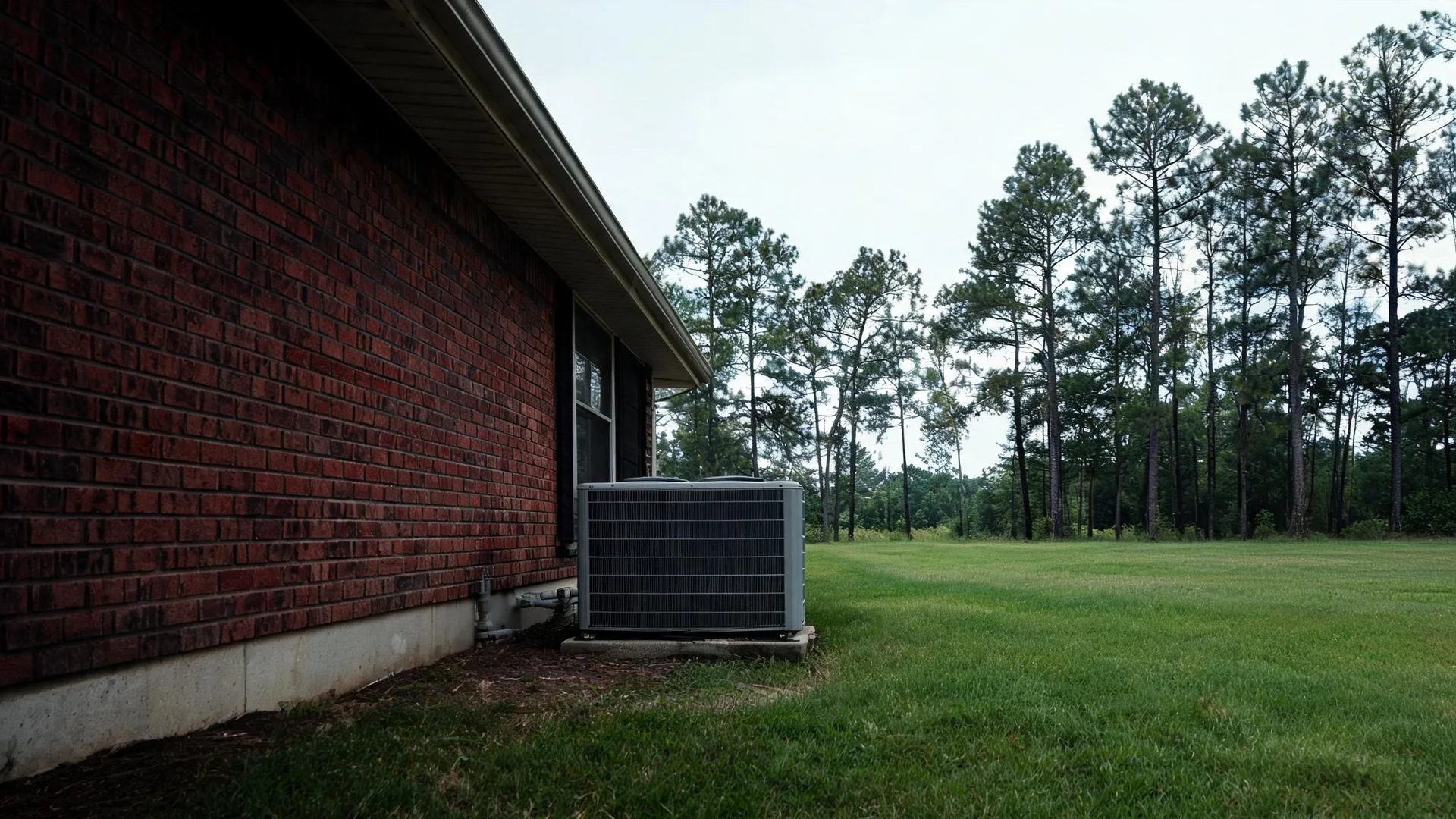
The compressor in a central AC system wears in proportion to how many hours it spends starting, stopping, and pushing heat outside. Homes in Jasper County, SC run cooling about five months a year, from May through September. Contactors, capacitors, and the condenser fan motor take the direct load of that cycling, and on a repair call in this county those are the parts a contractor pulls and tests before writing a quote. A refrigerant leak or a failing compressor winding here carries real accumulated stress behind it. Coil condition and electrical connections follow.
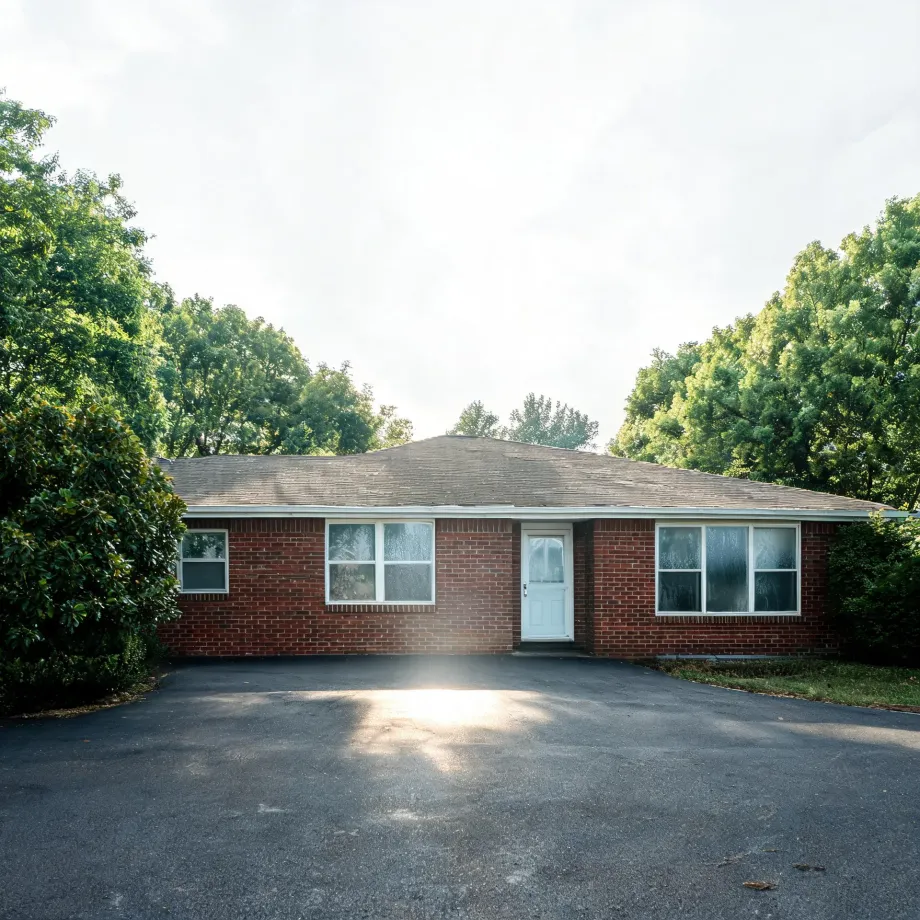
Recent housing stock carries its own diagnostic logic. Half the homes in Jasper County, South Carolina were built in 2003 or earlier (2020-2024 ACS 5-year). A system installed in a house of that vintage was put in alongside infrastructure sized for it, so when a repair call comes in, the building itself is unlikely to be where the contractor's attention lands. What drives the scope is what the opened unit contains: whether the compressor has failed outright, whether a refrigerant circuit is compromised, and whether the specific parts the system takes are still in supply from the manufacturer.
The Parts of a Central AC a Contractor Checks First
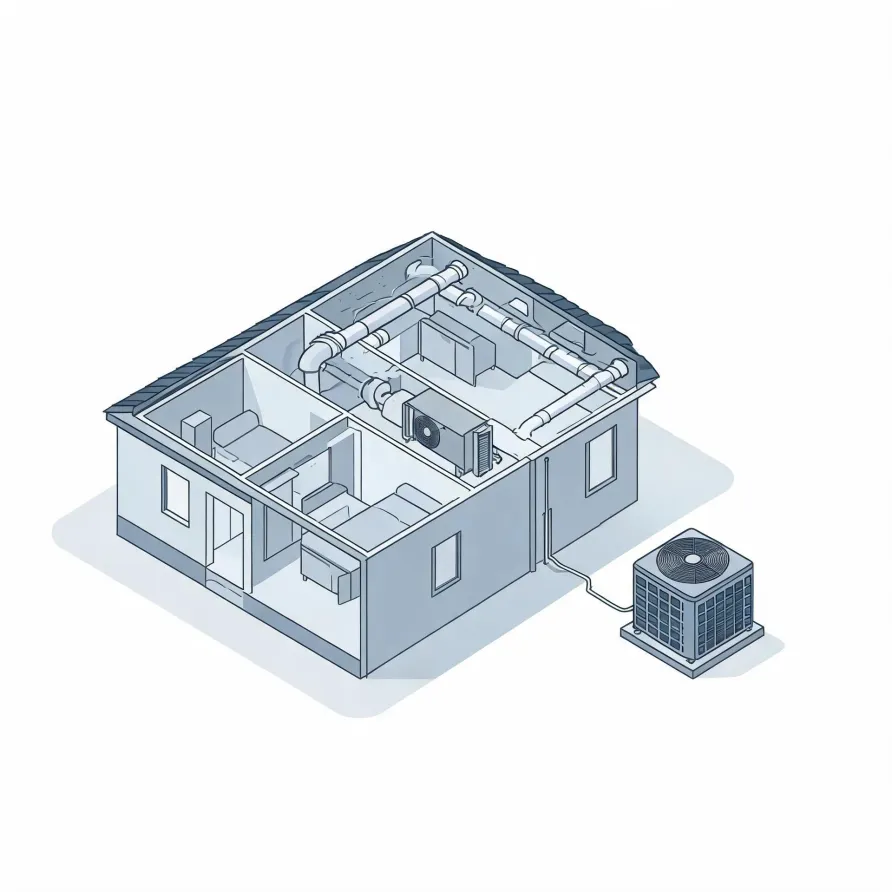
The outdoor condenser unit sits outside the house, usually on a concrete pad at ground level, and it is where the system sheds heat. When a central AC stops cooling or runs but blows warm air, this unit is often where a contractor looks first. The compressor inside it and the condenser coil around it are common failure points.
Inside the house, the air handler holds the evaporator coil and the blower that moves air through your home. The refrigerant lines connect these two units, and the expansion valve near the indoor coil controls refrigerant flow. A faulty blower motor, a frozen evaporator coil, or a refrigerant leak anywhere along those lines can each stop the system cold.
The drawing shows a typical central AC layout, and a licensed contractor determines which components apply to your specific setup.
Get matched in Jasper CountyJasper County, SC, by the Numbers
224 severe weather events were recorded in Jasper County, South Carolina between 2015 and 2024.
NOAA National Centers for Environmental Information, Storm Events Database, bulk CSV export, events 2015-01-01 through 2024-12-31.Half the homes in Jasper County, South Carolina were built in 2003 or earlier (2020-2024 ACS 5-year).
U.S. Census Bureau, 2020-2024 American Community Survey 5-Year EstimatesJasper County, South Carolina holds 14,758 housing units (2020-2024 ACS 5-year).
U.S. Census Bureau, 2020-2024 American Community Survey 5-Year EstimatesOwners occupy 77.2% of the occupied homes in Jasper County, South Carolina (2020-2024 ACS 5-year).
U.S. Census Bureau, 2020-2024 American Community Survey 5-Year EstimatesCodes & Standards Governing Central AC Repair in Jasper County, South Carolina9 sourced rules and standards
What HVAC Repair Looks Like in Jasper County
Split-system central air conditioners rated below 45,000 Btu/h manufactured on or after January 1, 2023 must meet a federal minimum of 13.4 SEER2.
Split-system central air conditioners rated at or above 45,000 Btu/h manufactured on or after January 1, 2023 must meet a federal minimum of 13.4 SEER2.
Split-system central air conditioners manufactured between January 1, 2015 and December 31, 2022 had to meet 13 SEER, the metric that preceded SEER2.
Single-package central air conditioners manufactured on or after January 1, 2023 must meet a federal minimum of 13.4 SEER2.
Space-constrained central air conditioners manufactured on or after January 1, 2023 must meet a federal minimum of 11.7 SEER2.
Federal efficiency standards for split-system central air conditioners and heat pumps are set on each certified combination of outdoor unit and indoor coil rather than on the outdoor unit alone.
Residential and light commercial air conditioning and heat pump systems assembled in the field, including mini-splits and unitary systems, may not be installed on or after January 1, 2025 using a refrigerant with a global warming potential above 700.
A field-assembled system whose specified components were all manufactured or imported before January 1, 2025 carries no installation compliance date under the refrigerant restrictions and may still be installed.
Licensing and Legal Requirements in Jasper County, South Carolina
South Carolina requires a mechanical contractor license for contracting work whose total cost of construction is greater than ten thousand dollars.
Severe Weather Events in Jasper County
Weather puts real hours on HVAC equipment. Every storm that moves through the area is a load event, and enough of them accelerate wear on components that then need a contractor's attention.
224 severe weather events, 2015–2024. Source: NOAA National Centers for Environmental Information, Storm Events Database.